
As a mom walking through developmental delays and autism, I’ve learned something that completely changed the way I see my son’s behaviors: every behavior is communication.
What may look like climbing on furniture, constantly jumping, covering ears, chewing on toys, avoiding certain textures, or having a meltdown isn’t always “bad behavior.” Often, it’s a child trying to tell us that their nervous system needs support.
Once I began learning about sensory processing, so many things started to make sense. I realized my son’s brain wasn’t processing the world the same way mine was. He wasn’t trying to be difficult-he was trying to make sense of a world that sometimes felt too loud, too bright, too fast, or simply overwhelming.
Understanding sensory processing has helped me respond with more patience, more compassion, and more confidence. Instead of asking, “How do I stop this behavior?” | started asking, “What is my child trying to communicate?”
That simple shift changed everything.
If you’re just beginning your sensory journey, I hope this guide helps you better understand how the sensory system works, why sensory input is so important, and how creating a thoughtful sensory diet can help your child feel calmer, more regulated, and ready to learn.
I quickly learned that our brains are constantly taking in information from the world around us—what we see, hear, touch, smell, taste, and even how our bodies move through space. For some children, especially those with autism, ADHD, developmental delays, or sensory processing challenges, their brains process that information differently.
Some children constantly seek sensory input because their nervous system craves more stimulation.
Others avoid it because everyday sensations feel overwhelming or even painful.
Neither is wrong. Their brains are simply processing information differently.
Understanding your child’s sensory needs can be one of the biggest game changers in helping them learn, regulate emotions, improve behavior, and participate in everyday life.

What Is Sensory Processing?
Sensory processing is your brain’s ability to receive information from your senses, organize it, and respond appropriately.
Think of your child’s brain like an air traffic controller.
Every second, thousands of pieces of information are coming in.
- The tag on their shirt
- The sound of the TV
- Bright lights
- Someone talking
- The feeling of socks
- Their body moving
- Hunger
- Balance
- Temperature
For many children, the brain filters this information without them even thinking about it.
For children with sensory processing differences, the brain may have trouble organizing all that information. This can make everyday situations feel overwhelming, distracting, uncomfortable, or even unsafe.
The Eight Sensory Systems
Many people think there are only five senses, but there are actually eight that play an important role in development.
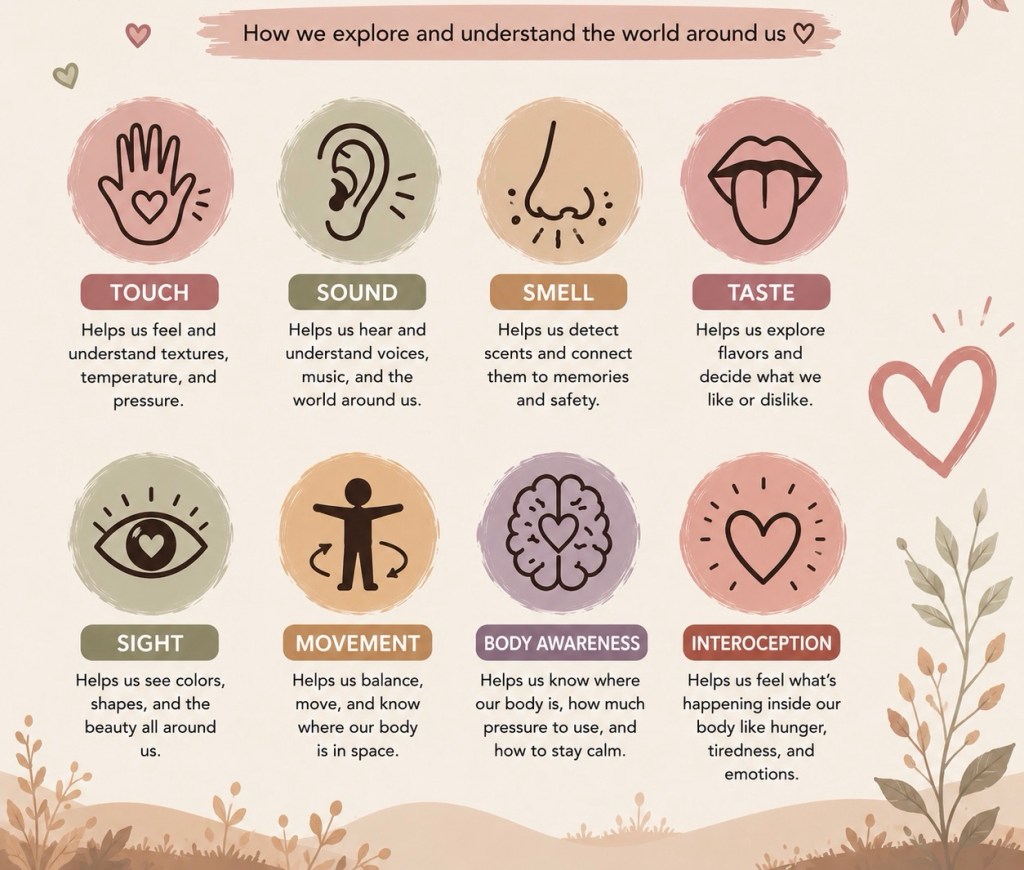
1. Touch (Tactile)
This helps us understand texture, pressure, pain, and temperature.
Examples:
- Playing with kinetic sand
- Finger painting
- Water play
- Rice bins
- Play-Doh
- Lotion massage
Benefits:
- Improves body awareness
- Helps tolerate different textures
- Supports fine motor development
2. Movement (Vestibular)
Located inside the inner ear, this system tells us where our head is in space.
Examples:
- Swinging
- Rocking
- Jumping
- Spinning (when appropriate)
- Sliding
- Dancing
Benefits:
- Improves balance
- Supports coordination
- Helps attention
- Builds postural control
3. Body Awareness (Proprioception)
This tells the brain where muscles and joints are without looking.
Examples:
- Carrying groceries
- Pushing a laundry basket
- Pulling a wagon
- Climbing
- Animal walks
- Wall pushes
Benefits:
- Calms the nervous system
- Improves coordination
- Helps children know how much force to use
- Supports motor planning
Many occupational therapists refer to proprioceptive activities as “heavy work” because they involve pushing, pulling, lifting, or carrying. These activities are often especially calming for children who seek movement.
4. Vision
Examples:
- Puzzles
- Tracking bubbles
- Flashlight games
- Matching games
- Reading books
Benefits:
- Visual tracking
- Focus
- Hand-eye coordination
5. Hearing (Auditory)
Examples:
- Listening to calming music
- Musical instruments
- Nature sounds
- Noise-canceling headphones when needed
Benefits:
- Language development
- Listening skills
- Emotional regulation
6. Smell (Olfactory)
Examples:
- Smelling spices
- Essential oils (used safely and age-appropriately)
- Flowers
- Fresh herbs
- Baking
Benefits:
- Memory
- Emotional connection
- Sensory exploration
7. Taste (Gustatory)
Examples:
- Crunchy foods
- Smooth foods
- Sour foods
- Chewy snacks
- Trying new flavors gradually
Benefits:
- Feeding development
- Oral motor skills
- Expanding food acceptance
8. Interoception
This is one of the newest sensory systems people are learning about.
It helps us recognize what’s happening inside our bodies.
Examples:
- Feeling hungry
- Knowing when we’re thirsty
- Recognizing a full bladder
- Feeling tired
- Noticing a racing heart
- Identifying emotions
Benefits:
- Emotional regulation
- Potty training
- Self-awareness
- Independence
What Is a Sensory Diet?
A sensory diet isn’t about food.
It’s a personalized plan of sensory activities completed throughout the day to help a child’s nervous system stay regulated.
Just like our bodies need healthy meals throughout the day, our brains often need healthy sensory input.
The goal isn’t to “fix” a child—it’s to give their nervous system the type of input it needs so they can feel calm, focused, and ready to learn.
A sensory diet should always be individualized, ideally with guidance from an occupational therapist.
Signs Your Child May Need More Sensory Input
Every child is different, but some common signs include:
- Constant jumping
- Crashing into furniture
- Walking on tiptoes
- Spinning frequently
- Difficulty sitting still
- Chewing on shirts or toys
- Covering ears
- Avoiding certain clothing
- Trouble transitioning
- Frequent meltdowns
- Seeking hugs or deep pressure
- Difficulty focusing
These behaviors are not necessarily “bad behavior.” Often, they’re your child’s way of communicating that their nervous system needs support.
Easy Sensory Activities You Can Try at Home
Heavy Work
- Carry groceries
- Push a laundry basket
- Move couch cushions
- Pull a wagon
- Help vacuum
Vestibular Activities
- Swinging
- Jumping on a trampoline
- Dancing
- Obstacle courses
- Hopscotch
Tactile Activities
- Water play
- Shaving cream
- Kinetic sand
- Play-Doh
- Rice bins
- Finger painting
Oral Sensory Activities
- Smoothies
- Thick yogurt
- Crunchy vegetables
- Drinking through a straw
- Chewy snacks (when developmentally appropriate)
Calming Activities
- Weighted blanket (with professional guidance)
- Deep-pressure hugs if welcomed
- Reading together
- Breathing exercises
- Dim lighting
- Quiet sensory corner
Why Sensory Regulation Matters for Learning
When a child’s nervous system feels overwhelmed, their brain shifts into survival mode.
In that state, it’s much harder to:
- Pay attention
- Learn new skills
- Communicate
- Follow directions
- Play with others
- Manage emotions
Meeting sensory needs first often creates the foundation for learning, communication, and social interaction.
Work With Your Occupational Therapist
While there are many wonderful sensory activities you can try at home, every child has unique sensory needs. An occupational therapist can assess your child’s sensory profile and help design a personalized sensory diet that supports their development safely and effectively.
Final Thoughts
I’ve learned that sensory needs aren’t something to fear or try to eliminate—they’re something to understand.
Once we stop asking, “Why is my child doing this?” and start asking, “What might my child’s nervous system be trying to tell me?” everything begins to change.
Sometimes a child isn’t being difficult.
Sometimes they’re simply doing their best to regulate in a world that feels too loud, too bright, too busy, or too overwhelming.
By meeting them where they are and providing the right sensory experiences, we can help them feel safer, calmer, more connected, and better able to learn.
Progress doesn’t happen all at once, but every swing, every cuddle, every heavy-work activity, every sensory bin, and every moment of connection is another step toward helping your child thrive.
Frequently Asked Questions
Can a sensory diet help children with autism?
Many autistic children benefit from individualized sensory strategies that help them regulate attention, emotions, and participation in daily routines. Because every child is different, a sensory diet should be tailored to their unique needs.
How often should a sensory diet be used?
This varies by child. Some children benefit from short sensory activities throughout the day, while others may need specific supports before challenging transitions or learning tasks. Your occupational therapist can help determine the best schedule.
Can sensory activities be done at home?
Absolutely. Many effective sensory activities—such as heavy work, water play, obstacle courses, and calming routines—can be incorporated into everyday family life using simple household items.
Is sensory seeking always a sign of autism?
No. Sensory differences can occur in autistic children, children with ADHD, developmental delays, anxiety, and even in children without a diagnosis. If you have concerns, discuss them with your child’s pediatrician or occupational therapist.




Leave a comment