If you’re raising an autistic child, you’ve probably spent a lot of time wondering how nutrition can support their development. One nutrient that gets a lot of attention is omega-3 fatty acids—healthy fats that play an important role in the brain, eyes, heart, and nervous system.
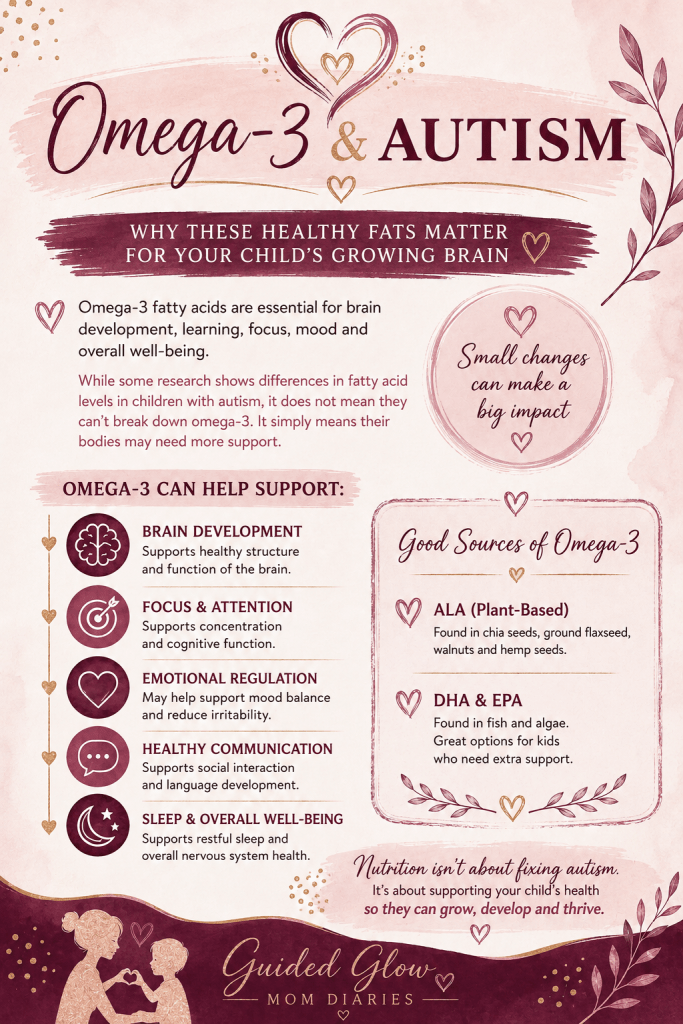
You may also hear claims that children with autism “can’t break down omega-3.” That’s not quite accurate. Research has found differences in fatty-acid levels and metabolism in some autistic children, but we don’t have evidence that autistic children as a group are unable to digest or break down omega-3.
What we do know is that omega-3s—especially DHA and EPA—are important nutrients during childhood, making it worthwhile to ensure your child is getting enough through their diet.
🧠 Why Omega-3 Is Important for the Brain
The brain contains a large amount of fat, and DHA is an important structural component of brain-cell membranes.
During childhood, omega-3 fatty acids help support:
✨ Normal brain development
✨ Healthy vision and eye development
✨ Normal nervous-system function
✨ Cell-membrane health
✨ Overall heart health
✨ A balanced inflammatory response
This doesn’t mean omega-3 can treat or cure autism. Autism is a neurodevelopmental condition, and there is currently not enough evidence to recommend omega-3 supplements as a treatment for the core characteristics of autism.
But there’s an important difference between trying to “treat autism” and making sure our children receive the nutrients their growing bodies need.
🧩 Omega-3 and Autism: What Does the Research Say?
Researchers have studied whether autistic children have different levels of fatty acids compared with non-autistic children. Some studies have reported differences, which has led scientists to investigate omega-3 supplementation.
Researchers have also looked at whether omega-3 supplementation could help areas such as:
- Attention and hyperactivity
- Irritability
- Social communication
- Repetitive behaviors
- Sleep and overall regulation
So far, the results have been mixed. Some individual studies have reported improvements in certain behaviors, while larger reviews have not found strong enough evidence to say omega-3 supplements reliably improve autism symptoms.
That’s why I think the best way to look at omega-3 is as nutrition—not an autism cure.
But Aren’t Flaxseed and Chia Seeds Omega-3?
Yes! And this is where omega-3 gets interesting.
There are several types of omega-3 fatty acids.
ALA is found primarily in plant foods such as:
- Chia seeds
- Ground flaxseed
- Walnuts
- Canola oil
Your body can convert ALA into EPA and DHA, but that conversion is limited. That’s why directly consuming DHA and EPA can also be important.
DHA and EPA are commonly found in:
🐟 Salmon
🐟 Sardines
🐟 Trout
🐟 Herring
🐟 Other fatty fish
For children who don’t eat fish, some foods are fortified with DHA, and algae-derived DHA/EPA supplements are another option to discuss with a pediatrician or dietitian.
Easy Ways to Add Omega-3 to a Child’s Diet
For picky eaters, adding omega-3 doesn’t have to mean suddenly putting a piece of salmon on their plate and expecting them to eat it.
You can start small.
Try mixing ground flaxseed or chia seeds into smoothies, oatmeal, yogurt, pancakes or muffins. Nut or seed butters and walnuts can also provide ALA when they’re developmentally appropriate and safely prepared.
If your child accepts fish, adding low-mercury fatty fish to meals can provide DHA and EPA directly.
For children with very restricted diets, feeding difficulties, allergies or sensory-related food aversions, talk with their pediatrician or registered dietitian about whether a DHA/EPA supplement would make sense.
💛 The Omega-3 We Use
I know finding a supplement your child will actually take can be a challenge, especially when you’re dealing with picky eating or sensory preferences.
I’m going to link the omega-3 that we personally use so you can easily check it out, look over the ingredients and see if it might be a good option for your family.
Always check with your child’s pediatrician or dietitian before adding a new supplement. What works for one child may not be appropriate for another.
[LINK To OMEGA-3 WE USE HERE]
⚠️ More Isn’t Always Better
It’s tempting to think that because something is healthy, giving more will provide greater benefits. That’s not necessarily true.
Children’s supplement needs depend on their age, diet, health history and other medications or supplements. Fish-oil products can also vary considerably in the amount of EPA and DHA they contain.
Always check with your child’s pediatrician or dietitian before starting a concentrated omega-3 supplement.
💕 Supporting Our Kids, One Small Change at a Time
When you have an autistic child, it’s easy to come across posts promising that one vitamin, supplement or diet will change everything.
Nutrition doesn’t need to be about “fixing” autism.
It can simply be about giving our children’s brains and bodies the building blocks they need to grow, develop and thrive.
Omega-3 fatty acids are one of those important building blocks.
Whether you’re adding chia seeds to a smoothie, mixing ground flaxseed into oatmeal, serving salmon your child actually enjoys, or talking with their healthcare team about DHA and EPA supplementation, small nutritional changes can help create a more balanced diet.Our goal isn’t to change who our children are. It’s to support their health while helping them reach their own potential. 💛
Disclaimer: This article is for educational purposes only and isn’t medical advice. Always speak with your child’s pediatrician or registered dietitian before starting supplements or making significant dietary changes. 🫶


Leave a comment